
A Dutch leasing company that went all‑in on Elon Musk’s robotaxi vision is reportedly heading for bankruptcy—offering a harsh real‑world test of Tesla most ambitious promises. Mistergreen, a Netherlands-based leasing and rental firm, built its entire business around one big idea: buy thousands of Tesla, hold them as “appreciating assets,” and eventually flip them into money‑making autonomous robotaxis.
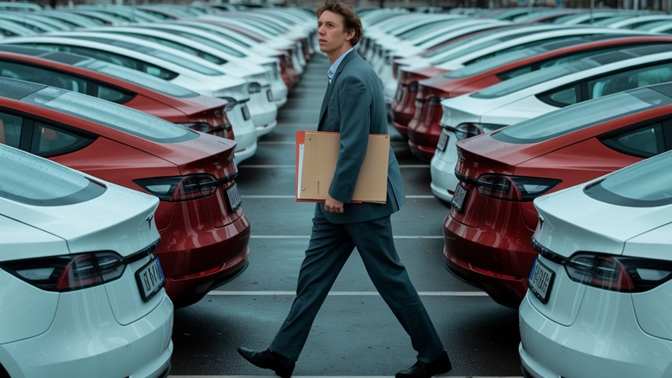
Instead, according to European reports, the company has wiped out its bondholders, is selling off its operations, and is facing bankruptcy, after Tesla’s aggressive price cuts and slow progress toward full autonomy crushed the value of its fleet. For everyday drivers, cheaper used Teslas are good news. For a company that borrowed heavily to buy over 4,000 of them, it was a financial disaster.
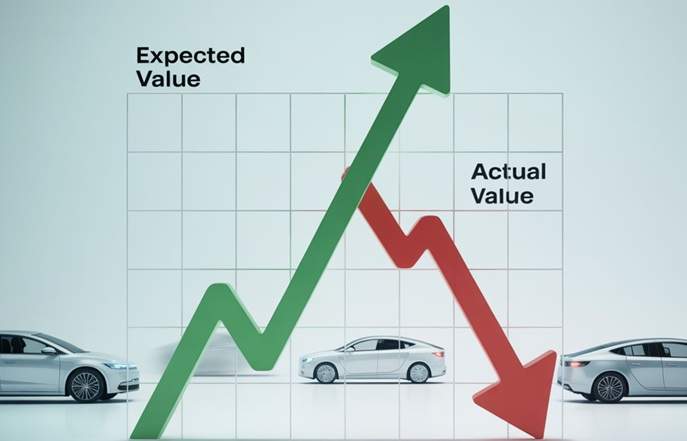
The core of Mistergreen’s strategy traces back to Elon Musk’s famous 2019 claim that Teslas would behave less like cars and more like tech stocks. Musk said that because of Tesla’s Full Self‑Driving (FSD) software, a new Tesla would actually gain value over time:
“If you buy a Tesla today, I believe you are buying an appreciating asset – not a depreciating asset.”
He even floated the idea that a Model 3 could be worth $100,000 to $200,000 as a revenue‑generating robotaxi once FSD was fully activated. Mistergreen essentially said: “Sounds good—let’s scale that up.”
- Focused its fleet exclusively on Tesla vehicles
- Issued bonds to finance thousands of cars
- Structured its business around:
- High residual values (what the cars would be worth later)
- Future robotaxi revenue powered by FSD
In its 2022 annual report, Mistergreen praised Tesla’s:
- Battery quality
- Over‑the‑air software updates
- Efficiency and range
- Supercharger network
The company argued this would mean higher residual values for Teslas compared to other EVs. On paper, it looked like a smart way to ride the EV wave. In practice, two big things broke the model.
Reality Check: Price Cuts and No Robotaxis
The first blow came from Tesla itself.
Over the last couple of years, Tesla has repeatedly slashed new vehicle prices to keep demand strong. That’s great if you’re buying a new Model 3 or Model Y—but brutal if you:
- Already own a Tesla
- Or worse, hold thousands of them on your balance sheet
When new-car prices drop sharply, used values follow. Mistergreen was forced to write down millions in fleet value as its used Teslas suddenly became worth much less than expected. The second blow? The robotaxi dream is still mostly just that—a dream. Despite real progress on driver-assistance, Tesla’s FSD remains a Level 2 system, meaning it requires constant human supervision. The fully autonomous Level 4 capability needed for true robotaxis just isn’t here in consumer vehicles.
Musk has been forecasting “1 million robotaxis by the end of the year” since 2020. Yet by the mid‑2020s, what we actually have is: A small, tightly controlled pilot program in a geo‑fenced area in Texas, Heavy supervision and limitations, And no sign of privately owned Teslas transforming into legally approved, unsupervised robotaxis at scale. For Mistergreen, that gap between the sales pitch and the real world proved fatal.
| Category | Mistergreen’s Bet |
|---|---|
| Vehicle Value | Teslas would be “appreciating assets” thanks to FSD and future robotaxi use |
| Robotaxi Revenue | Fleet would evolve into revenue-generating robotaxis |
| Residual Value Risk | High residual values would make long-term leasing low risk |
| Financing Structure | Bonds backed by a high-value Tesla fleet would be safe and profitable |
| EV Market Position | Tesla’s charging network and tech would guarantee superior resale |
A couple of leasing companies in the Netherlands, Belgium, and Germany are reportedly stepping in to buy the remaining fleet. But for Mistergreen’s investors and bondholders, a lot of money has already gone up in smoke.
If you bought a Tesla for $50,000 in 2022 thinking it would be worth $100,000 today as a robotaxi, you’re almost certainly disappointed. If you bought 4,000 of them with borrowed money, you’re Mistergreen.
FSD is undeniably impressive compared to older driver-assist systems. But “impressive” is not the same as: Legally approved, Fully autonomous, Ready to operate as an unsupervised taxi. Building an entire financial model around optimistic software timelines—especially when regulators are involved—is asking for trouble.
Tesla’s pricing strategy is simple: when demand softens, it cuts prices and makes it up on volume. That’s fine if you’re a shopper. But if you’re: A leasing company, A rental fleet, Or a heavily leveraged investor. you’re exposed to a huge amount of pricing risk you don’t control.
Cars are wear items. They get older, their tech ages, and new models arrive with better features. The idea that a mass‑market sedan or SUV would appreciate like real estate or stock was always a huge leap. Software updates can help keep a car fresh. They don’t magically override: Physical wear and tear, Market competition, Aggressive price cuts on new inventory.
Mistergreen’s reported collapse isn’t just a story about one Dutch leasing company. It’s a real‑world stress test of a narrative that’s been floating around the EV world for years: that Teslas aren’t just cars, they’re assets. Buy an EV because you like how it drives, you want lower running costs, and you’re ready to plug in instead of pump gas. Don’t buy one because you think it’s going to pay your mortgage as a future robotaxi.
And for investors and fleet operators, Mistergreen is now a case study in what happens when you take marketing promises too literally and leverage them to the hilt. EVs are here to stay. But so are basic financial realities—no matter how good the software demo looks.
Related Post


