
Let’s be real for a second. We have heard it all when it comes to electric vehicles. Over the last decade, automakers have tried every trick in the book to convince us that charging isn’t a hassle. We’ve seen Toyota pushing their confusing “self-charging hybrid” marketing (which is just a gas car with a battery hobby), and we’ve seen the recent craze of “range extenders” that are basically plug-ins carrying a generator backpack.
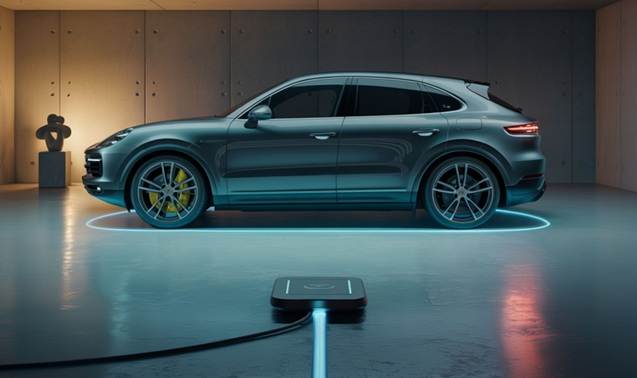
But today, Porsche decided to stop the gimmicks and actually solve the problem. With the unveiling of the new Porsche Cayenne EV, the German automaker dropped a bombshell that we haven’t seen from a factory-equipped car before: Inductive Charging. That’s right, folks. No plugs. No cables. No wrestling with a thick rubber snake in the rain. You just park, and the magic happens.
If you have a modern smartphone or an electric toothbrush, you’ve already used this tech. Inductive charging uses magnetic fields to transfer electrical power wirelessly. It’s the exact same concept as dropping your iPhone on a MagSafe pad, but scaled up massively to handle a 6,000-pound SUV.
Until now, this tech has been the stuff of science fiction or aftermarket experiments. We’ve seen it tested on city buses and heard rumors about it coming to the Tesla Cybertruck (eventually), but Porsche is the first to say, “Hey, we’re putting this on the options list right now.” Here is the rundown on how this system operates in the real world. You get a specific charging pad installed in your garage. When you pull the Cayenne in, the car and the pad do a little digital handshake via wide-band wireless communication.
But you can’t just park willy-nilly. You need to be precise. To help with this, the Cayenne’s infotainment screen turns into a landing strip, showing you guide lines to get your tires in the perfect spot. Once you are aligned, the pad activates, and the electrons start flowing. (Though, if you want to keep it old school, the classic “tennis ball hanging from the ceiling” trick works just as well).
Is It Actually Good?
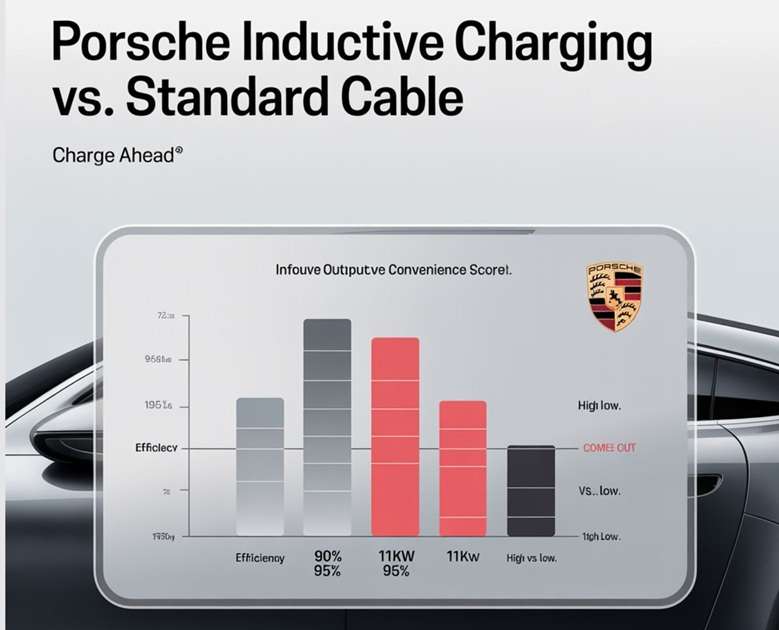
You might be thinking, “Wireless charging is slow on my phone, so it must be slow on a car.” Surprisingly, Porsche has crunched the numbers, and they look solid. The system pushes 11kW of power. That is the standard speed for most Level 2 home chargers. It’s plenty of juice to fill the Cayenne’s massive 113kWh battery overnight. The system runs at 90% efficiency. While a hardwired cable gets you about 95%, losing only 10% to the “wireless air gap” is impressive engineering. There is no such thing as a free lunch. The copper coils and wiring needed inside the car add about 33 lbs to the vehicle’s weight. It’s significant, but on a heavy SUV, you probably won’t feel it in the corners.
One of the biggest questions Porsche gets asked is, “What happens if my cat sleeps under the car?”
It’s a valid concern. You are effectively creating a magnetic field under the vehicle. However, Porsche is way ahead of us. The charging mat is packed with sensors designed to detect living things or metal objects. During a studio demo in Los Angeles, the system was put to the test. If it detects movement—like a pet seeking warmth or a kid’s stray basketball rolling under the bumper—it shuts off instantly. Once the coast is clear, it checks again and resumes charging.
Pros and Cons: Wireless vs. The Plug
| Feature | Traditional Plug (Conductive) | Porsche Wireless (Inductive) |
|---|---|---|
| Convenience | Low (Have to unwind/plug in every time) | High (Just park and walk away) |
| Speed | 11kW (Home) to 400kW (DC Fast) | 11kW (Home Use Only) |
| Efficiency | ~95% | ~90% |
| Weather Proof | Works in rain/snow, but cables get dirty | Works through air, no touching dirty gear |
| Cost | Included with car / Cheap to install | Expensive option + Electrical work |
Let’s address the elephant in the room: The price. While US pricing isn’t confirmed, this option costs around €7,000 ($7,600) in Europe, plus the cost of the electrician to install the pad. That is a steep price to pay to avoid spending ten seconds plugging in a cable.
For older drivers or folks with mobility issues, wrestling with a thick, heavy charging cable can be a genuine barrier to owning an EV. This tech removes that physical hurdle completely. If we ever get to a point where cars drive themselves, they will need to charge themselves, too. A robot taxi can’t plug itself in (yet), but it can certainly drive over a pad. Let’s be honest, some people just hate the look of cables draped over their clean garage walls. This keeps the setup invisible.
Porsche is taking a bold swing here. While I’ve always been a bit of a skeptic regarding “electrified roads” and wireless charging—mostly because plugging in really isn’t that hard—it’s cool to see a manufacturer pushing the envelope. The Cayenne EV will still come with standard charging ports capable of blazing-fast 400kW charging for road trips, so you aren’t tethered to your garage mat forever. Will this become the new standard? Probably not anytime soon, given the cost. But for the Porsche buyer who wants the bleeding edge of tech and hates dirty hands, the future has finally arrived.
Related Post


